
Berita
Kapolri Ajak Masyarakat Dukung Presiden Prabowo Jaga Perdamaian Dunia

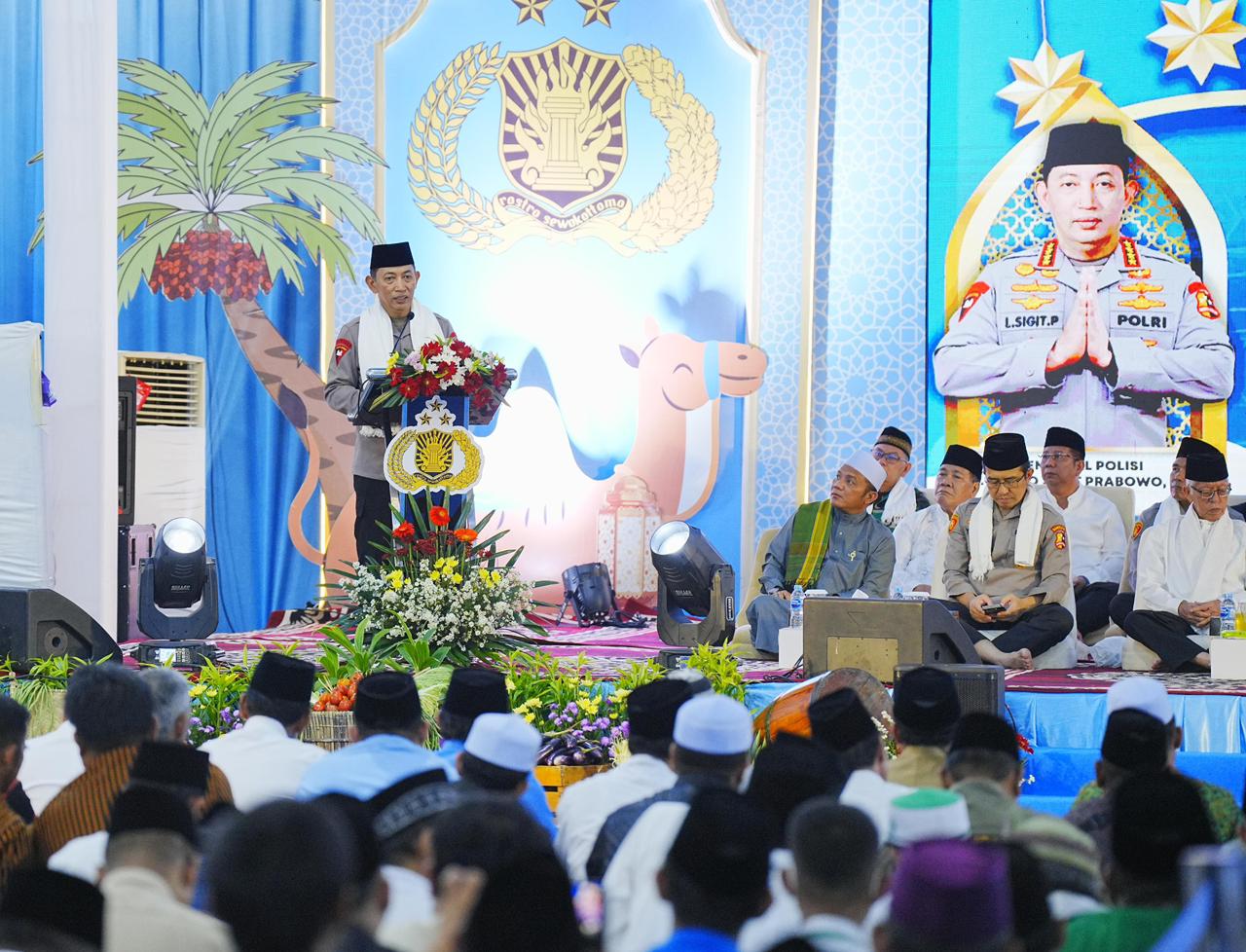
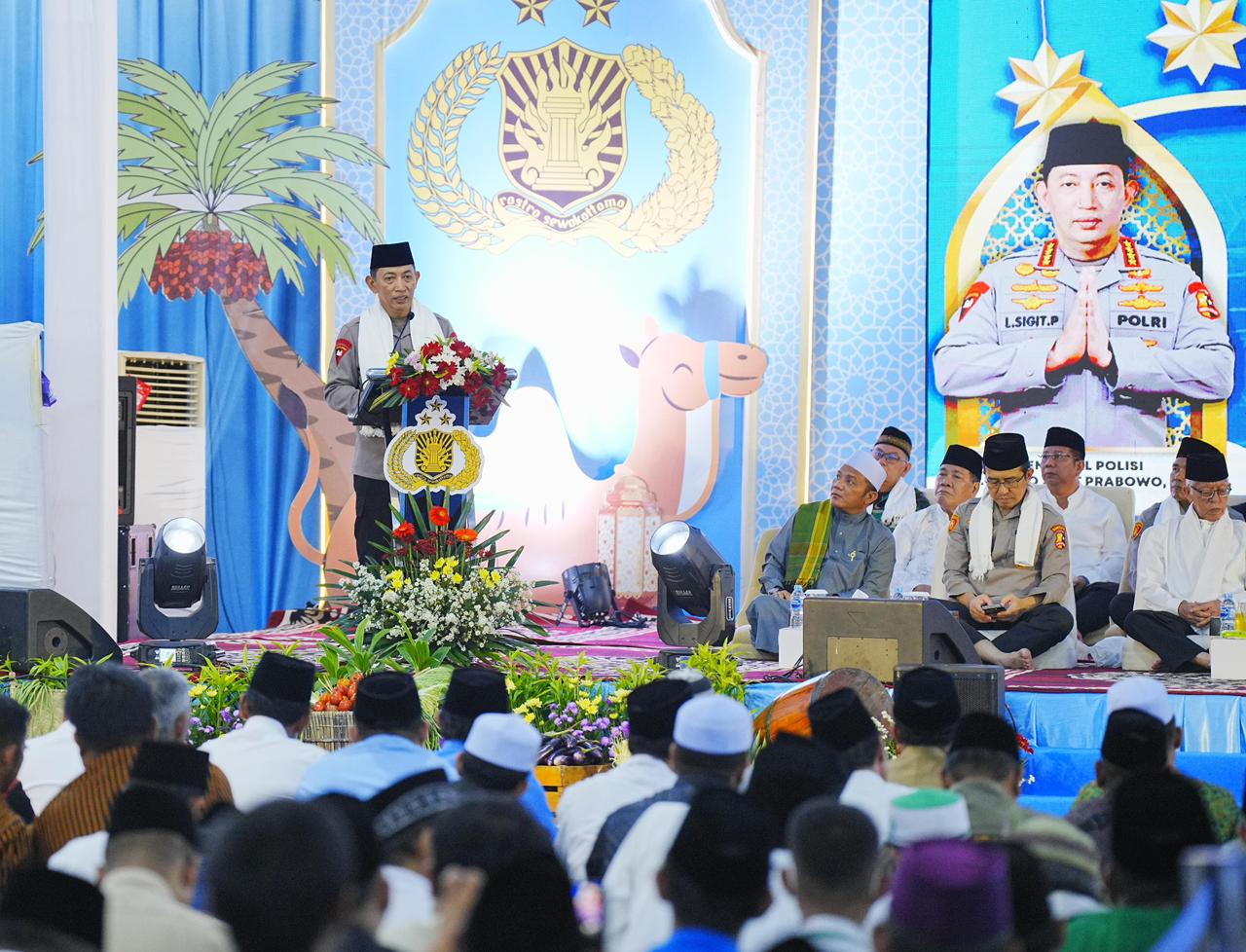
Kapolri Jenderal Listyo Sigit Prabowo mengajak seluruh masyarakat untuk mendukung upaya Presiden Prabowo Subianto dalam menjaga perdamaian dunia di tengah konflik global yang sedang terjadi.
Hal itu disampaikan Kapolri dalam sambutannya dalam acara safari Ramadan di Polda Sumsel, pada Sabtu (7/3) sore.
Sigit mengatakan dalam beberapa waktu terakhir Presiden Prabowo Subianto secara khusus mengundang tokoh-tokoh elite politik, mantan Menteri Luar Negeri hingga pemuka agama untuk berdiskusi tentang situasi yang terjadi saat ini.
“Beberapa waktu yang lalu Bapak Presiden mengundang tokoh-tokoh elit, mengundang para tokoh-tokoh agama untuk kemudian berembuk bersama apa yang harus kita lakukan dan salah satu kuncinya kita harus solid dalam menghadapi situasi saat ini,” tuturnya.
Ia mengatakan secara diplomatik, Presiden Prabowo juga terus berkomunikasi dengan negara lain dalam rangka mencari jalan keluar untuk meredakan ketegangan di Timur Tengah.
Di sisi lain, Sigit menyebut pemerintah juga melakukan mitigasi agar perekonomian masyarakat tetap dapat terjaga dan tidak terdampak begitu besar akibat eskalasi antara Iran dengan Amerika Serikat dan Israel.
“Oleh karena itu, dalam kesempatan ini tentunya mari kita bersama-sama menghadapi situasi yang ada dengan semangat yang sama. Yakinlah bahwa pemerintah tentu akan melakukan langkah-langkah yang terbaik,” jelasnya.
Kapolri menambahkan dalam banyak kesempatan Presiden Prabowo juga berjanji akan melindungi seluruh rakyat sesuai dengan amanah Konstitusi. Karenanya, ia meminta agar seluruh rakyat dapat bersatu mendukung penuh langkah yang diambil pemerintah.
“Mari kita berdoa bersama, kita berikhtiar bersama agar semua tantangan yang sedang kita hadapi ini bisa kita lalui dan kita bisa mendukung, kita bisa mandiri,” pungkasnya

COVID-19 is a contagious disease caused by the coronavirus SARS-CoV-2. In January 2020, the disease spread worldwide, resulting in the COVID-19 pandemic.
The symptoms of COVID‑19 can vary but often include fever,[7] fatigue, cough, breathing difficulties, loss of smell, and loss of taste.[8][9][10] Symptoms may begin one to fourteen days after exposure to the virus. At least a third of people who are infected do not develop noticeable symptoms.[11][12] Of those who develop symptoms noticeable enough to be classified as patients, most (81%) develop mild to moderate symptoms (up to mild pneumonia), while 14% develop severe symptoms (dyspnea, hypoxia, or more than 50% lung involvement on imaging), and 5% develop critical symptoms (respiratory failure, shock, or multiorgan dysfunction).[13] Older people have a higher risk of developing severe symptoms. Some complications result in death. Some people continue to experience a range of effects (long COVID) for months or years after infection, and damage to organs has been observed.[14] Multi-year studies on the long-term effects are ongoing.[15]
COVID‑19 transmission occurs when infectious particles are breathed in or come into contact with the eyes, nose, or mouth. The risk is highest when people are in close proximity, but small airborne particles containing the virus can remain suspended in the air and travel over longer distances, particularly indoors. Transmission can also occur when people touch their eyes, nose, or mouth after touching surfaces or objects that have been contaminated by the virus. People remain contagious for up to 20 days and can spread the virus even if they do not develop symptoms.[16]
Testing methods for COVID-19 to detect the virus’s nucleic acid include real-time reverse transcription polymerase chain reaction (RT‑PCR),[17][18] transcription-mediated amplification,[17][18][19] and reverse transcription loop-mediated isothermal amplification (RT‑LAMP)[17][18] from a nasopharyngeal swab.[20]
Several COVID-19 vaccines have been approved and distributed in various countries, many of which have initiated mass vaccination campaigns. Other preventive measures include physical or social distancing, quarantining, ventilation of indoor spaces, use of face masks or coverings in public, covering coughs and sneezes, hand washing, and keeping unwashed hands away from the face. While drugs have been developed to inhibit the virus, the primary treatment is still symptomatic, managing the disease through supportive care, isolation, and experimental measures.
COVID-19 is a contagious disease caused by the coronavirus SARS-CoV-2. In January 2020, the disease spread worldwide, resulting in the COVID-19 pandemic.
The symptoms of COVID‑19 can vary but often include fever,[7] fatigue, cough, breathing difficulties, loss of smell, and loss of taste.[8][9][10] Symptoms may begin one to fourteen days after exposure to the virus. At least a third of people who are infected do not develop noticeable symptoms.[11][12] Of those who develop symptoms noticeable enough to be classified as patients, most (81%) develop mild to moderate symptoms (up to mild pneumonia), while 14% develop severe symptoms (dyspnea, hypoxia, or more than 50% lung involvement on imaging), and 5% develop critical symptoms (respiratory failure, shock, or multiorgan dysfunction).[13] Older people have a higher risk of developing severe symptoms. Some complications result in death. Some people continue to experience a range of effects (long COVID) for months or years after infection, and damage to organs has been observed.[14] Multi-year studies on the long-term effects are ongoing.[15]
COVID‑19 transmission occurs when infectious particles are breathed in or come into contact with the eyes, nose, or mouth. The risk is highest when people are in close proximity, but small airborne particles containing the virus can remain suspended in the air and travel over longer distances, particularly indoors. Transmission can also occur when people touch their eyes, nose, or mouth after touching surfaces or objects that have been contaminated by the virus. People remain contagious for up to 20 days and can spread the virus even if they do not develop symptoms.[16]
Testing methods for COVID-19 to detect the virus’s nucleic acid include real-time reverse transcription polymerase chain reaction (RT‑PCR),[17][18] transcription-mediated amplification,[17][18][19] and reverse transcription loop-mediated isothermal amplification (RT‑LAMP)[17][18] from a nasopharyngeal swab.[20]
Several COVID-19 vaccines have been approved and distributed in various countries, many of which have initiated mass vaccination campaigns. Other preventive measures include physical or social distancing, quarantining, ventilation of indoor spaces, use of face masks or coverings in public, covering coughs and sneezes, hand washing, and keeping unwashed hands away from the face. While drugs have been developed to inhibit the virus, the primary treatment is still symptomatic, managing the disease through supportive care, isolation, and experimental measures.
tc-manager precheck test1 – https://test1.com
-
 Polres6 hari ago
Perkuat Pondasi Kamtibmas, Kapolres Pasuruan Kota Gelar Silaturahmi Dengan Habib Qodir Assegaf
-
 Berita1 minggu ago
Polresta Malang Kota Edukasi Pelajar tentang Bahaya Kejahatan Siber dan Judol
-
Berita6 hari ago
Sinergi Bhabinkamtibmas Desa Semare dan Perangkat Desa Wujudkan Kamtibmas Aman Kondusif
-
Berita6 hari ago
Polsek Pohjentrek Antisipasi Gangguan Kamtibmas Pada Objek Vital Bank BRI
-
 Berita1 minggu ago
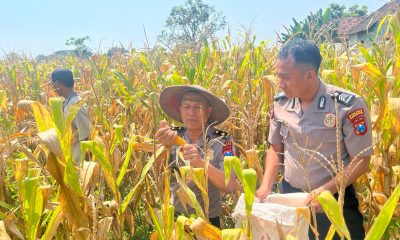
Dukung Swasembada Pangan, Polres Pasuruan Kota Lakukan Pengawasan Lahan Binaan di Kebonagung
-
Berita6 hari ago
Perkuat Pondasi Kamtibmas, Kapolres Pasuruan Kota Gelar Silaturahmi Dengan Habib Qodir Assegaf
-
 Berita6 hari ago
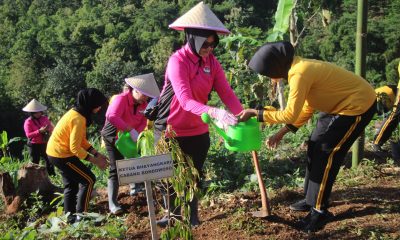
Gerakan Tanam Pohon, Polres Bondowoso Hijaukan Bukit Bintang
-
 Polres4 hari ago
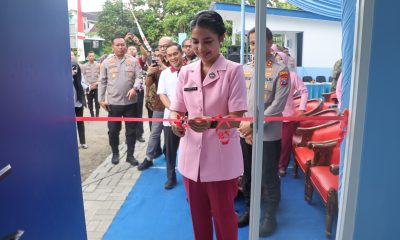
Polres Blitar Kota Luncurkan SPPG Ketapang Layani 886 Penerima Manfaat Program MBG